America's Permit State Goes on Trial
A decade of paperwork has cost the United States more gigawatts than any cartel ever could. Now a cross-party coalition of builders, governors and impatient voters wants the right to build back.

The most consequential economic hearing in Washington this year had no cameras, no shouting and, for most of its four hours, no politicians. In a committee annex two blocks from the Capitol, a procession of engineers, utility executives and county officials walked a bipartisan staff panel through a single question: how long does it take to get permission to build something in the United States, and what does the waiting cost?
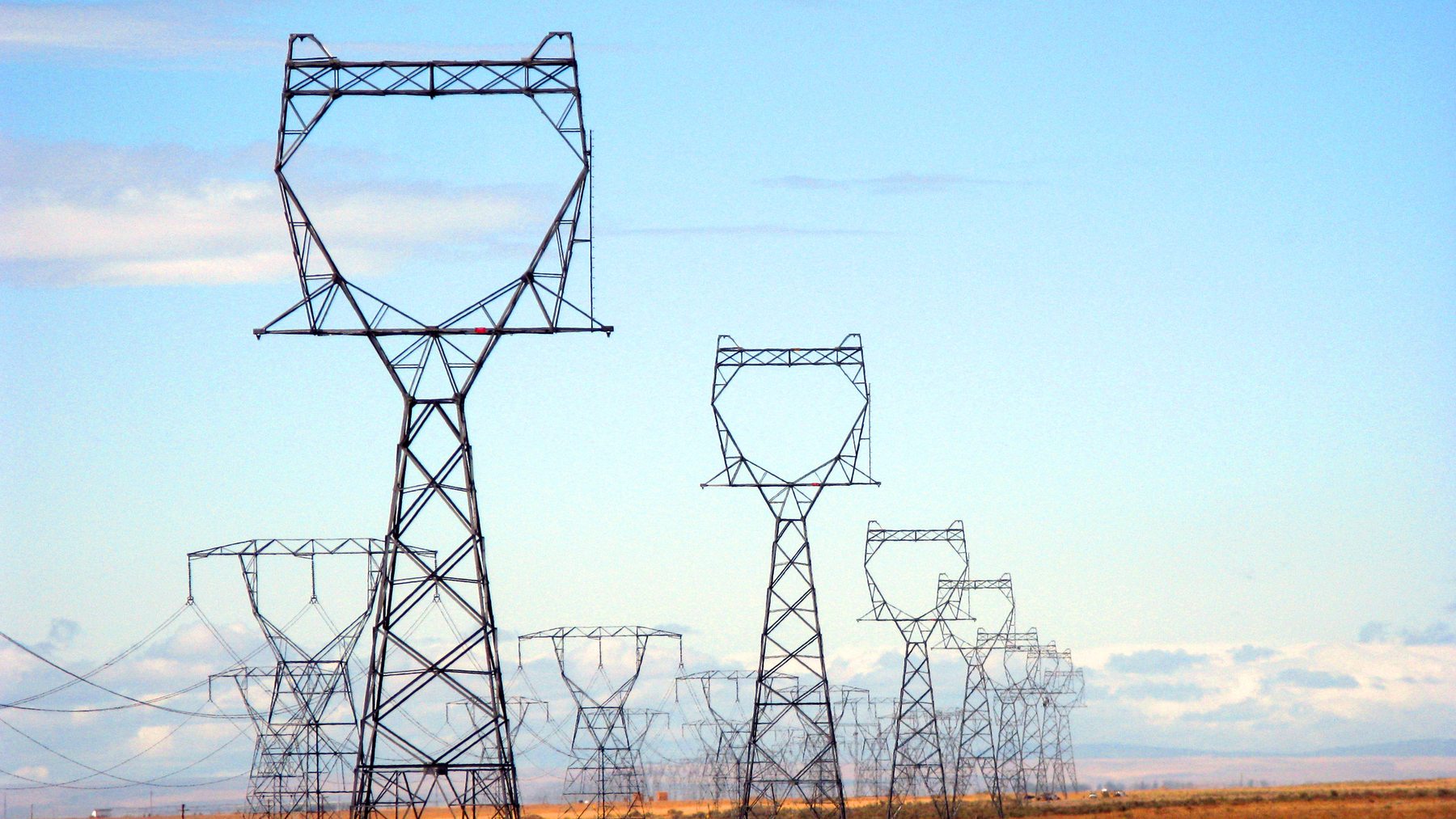
The answers, compiled in a staff report released Tuesday, are stark. The median federal environmental review for a major energy project now runs four and a half years, before state and local processes begin. Transmission lines average nine years from application to energisation. One interstate line, approved in principle in 2015, has since been re-reviewed three times without a single tower being raised. The report's authors estimate that projects currently idling in federal queues represent some 280 gigawatts of generation and storage, roughly a quarter of existing US capacity, and more than $600 billion in committed private investment waiting on a signature.
For two generations, the United States has made it easy to object and hard to act, and then wondered at the results.
From the analysisWhat has changed is not the numbers, which researchers have documented for years, but the politics around them. The coalition pressing for reform no longer fits a partisan template. Sun-belt governors want factories and the substations to power them. Northern states want offshore wind that is approved in Washington but becalmed in appeals. Labour unions want the jobs that exist only after the ground is broken. And a generation of voters priced out of housing has begun to ask, with some edge, why the wealthiest country in history treats construction as a suspicious activity.
The intellectual weather has shifted too. A decade ago, permitting reform was a niche cause of trade associations. Today it is the rare policy that thrives in both parties' think tanks, framed on one side as industrial strategy, on the other as deregulation, and increasingly by both as common sense. The staff report borrows a phrase that has been circulating in reform circles all year: the permit state is “a tax levied in time,” and time, unlike money, cannot be refunded.
Markets, characteristically, moved before the politicians did. Since March, an informal “builders' basket” of grid-equipment makers, engineering firms and aggregates producers has outperformed the S&P 500 by eleven percentage points, as investors handicap the odds that queues start clearing. Utility executives, a cautious tribe, have begun signing equipment orders against approvals they expect rather than approvals they hold, the clearest signal yet that the industry believes the direction of travel has changed.
The counter-arguments deserve a fair hearing, and the serious ones get it in the report. Review exists because externalities exist; a substation sited badly is someone's backyard for fifty years. But the report's central finding is that length has become detached from rigour. The longest reviews are not the most thorough, they are the most litigated, and litigation rewards delay regardless of merit. Jurisdictions that have imposed binding clocks, from Ontario to parts of Texas, show no measurable decline in environmental outcomes. They simply decide faster, in both directions.
The reform package now being drafted, shot clocks on agency decisions, a single lead agency per project, a two-year statute of limitations on procedural challenges, is modest by the standards of what its loudest advocates want. It is also, veterans of past attempts note, the first version with a plausible floor of sixty Senate votes. The White House, which issued its own sunset order on duplicative licensing rules this week, has signalled it would sign a clean bill.
There is a larger stake here than megawatts. A country reveals what it values by what it makes easy. For two generations, the United States has made it easy to object and hard to act, and then wondered at the results. The trial now underway in Washington is not really of any single statute. It is of the proposition, older than the republic's highways and newer than its data centres, that a free country ought to be able to build the future it says it wants, and that the burden of proof belongs on those who would stop it.
The Semaform
A bipartisan Senate staff report finds 280 gigawatts of approved energy and grid capacity, over $600 billion in private investment, stalled in federal permitting queues, some for over a decade.
This is the free-market case in one chart: the capital and the will to build already exist. The only scarce resource is permission. Every month a shot-clock bill waits is backwards for a country that wants to out-compete anyone.
Binding review deadlines risk waving through genuinely harmful projects when agencies are under-resourced to review complex applications properly in the time allowed.
A human editor is accountable for this analysis. Read our editorial standards, how we use AI, what the content labels mean, and how to ask for a correction.