Australia's Rising Seas Are an Infrastructure Bill, Not a Future Abstraction
A peer-reviewed study puts a price on coastal flooding under a moderate-emissions pathway. The useful response is not panic or denial, but a public balance sheet for adaptation.

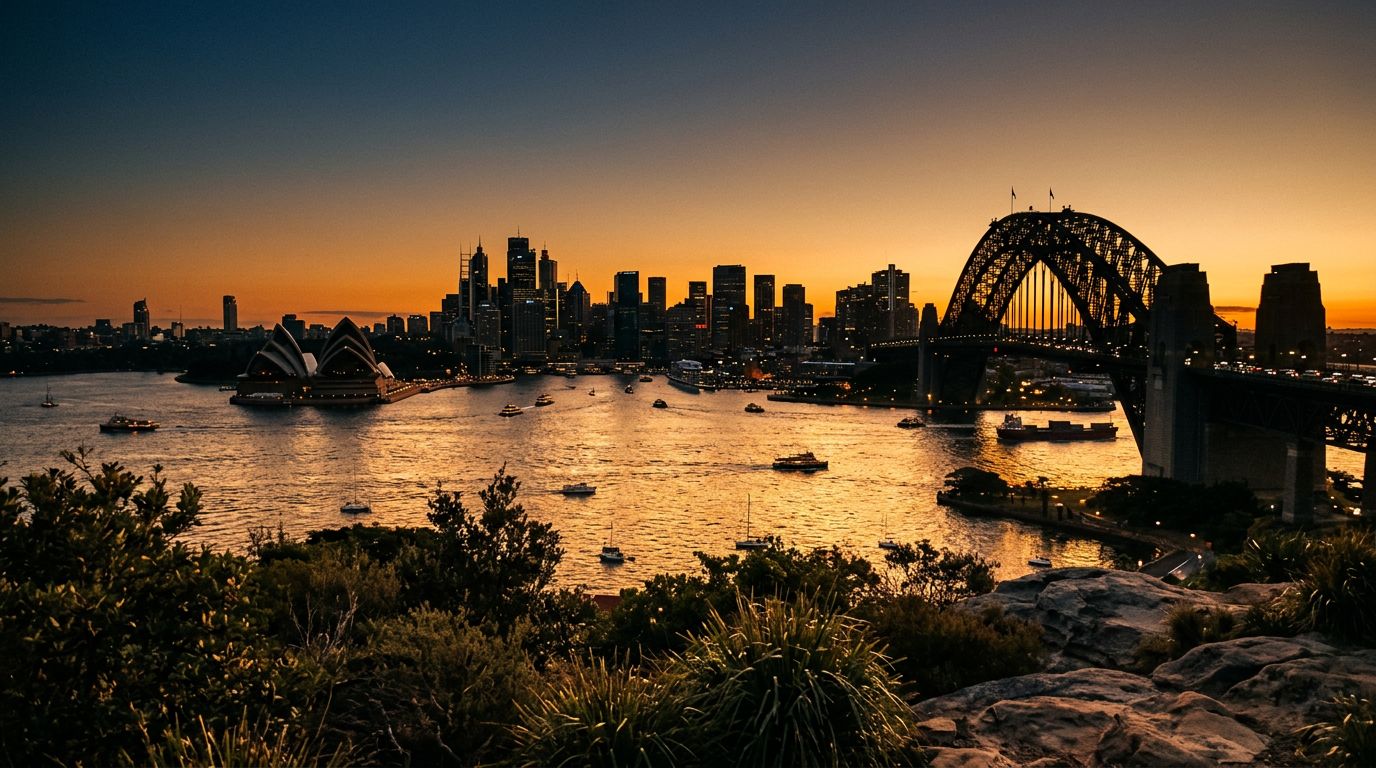
Australia is beginning to see sea-level rise as an economic liability rather than a distant environmental problem. Research published in Scientific Reports estimates that coastal flooding could damage more than 267,000 properties and two million hectares of land across the country by 2100. The modeled losses total A$855.1 billion: A$274.3 billion in property losses and A$580.7 billion in land-use damages.
Those figures come from a defined scenario, not a prophecy. The University of Melbourne and Australian National University researchers modeled the IPCC's SSP2-4.5 pathway, an intermediate-emissions scenario associated with roughly 2.7°C of warming by the end of the century. The estimate combines sea-level rise with storm surge. The number is therefore best read as the cost of leaving exposure unmanaged under a plausible policy path, not as an invoice that arrives in 2100.
Australia does not need to choose between preparing and reducing emissions.
From the analysisThe distribution matters as much as the headline. The Climate Council's analysis of the underlying research puts Queensland first for properties at risk, with 93,157, followed by New South Wales with 71,210 and Western Australia with 51,366. Western Australia carries the largest projected economic loss at A$230.5 billion. These are not only beachfront homes: the exposure includes farms, roads, utilities, industrial land and environmental assets.
That makes adaptation a capital-allocation problem. Governments should publish a coastline balance sheet that names the assets worth defending, the assets that can be redesigned, and the places where retreat is cheaper and safer than permanent repair. Each project should show its avoided-loss estimate, delivery date and maintenance bill. A dramatic national total is useful only when it becomes a sequence of choices that residents can inspect.
Australia does not need to choose between preparing and reducing emissions. Cutting pollution lowers the scale of future damage; better maps, building rules, drainage and targeted protection reduce the damage that is already coming. The constructive test is simple: spend first where a dollar of resilience prevents the most loss, and stop pretending that an unpriced risk is a free one.
Sources
- Scientific Reports, Economic impacts of sea-level rise and storm surge in Australia over the 21st century (Kompas et al., 2026)
- University of Melbourne, Rising sea levels could cost Australians at least A$855 billion by 2100
- Climate Council, Rising Seas, Rising Bills
- The Guardian, Australia's coastal flooding risk and the A$855.1bn projection, 10 September 2026
A human editor is accountable for this analysis. Read our editorial standards, how we use AI, what the content labels mean, and how to ask for a correction.