Trump Widens the 'Pay Your Own Way' Pledge as Nuclear Deregulation Accelerates
A ratepayer-protection pledge now covers roughly 80% of the power delivered to American homes, arriving alongside the most sweeping nuclear licensing overhaul in a generation.

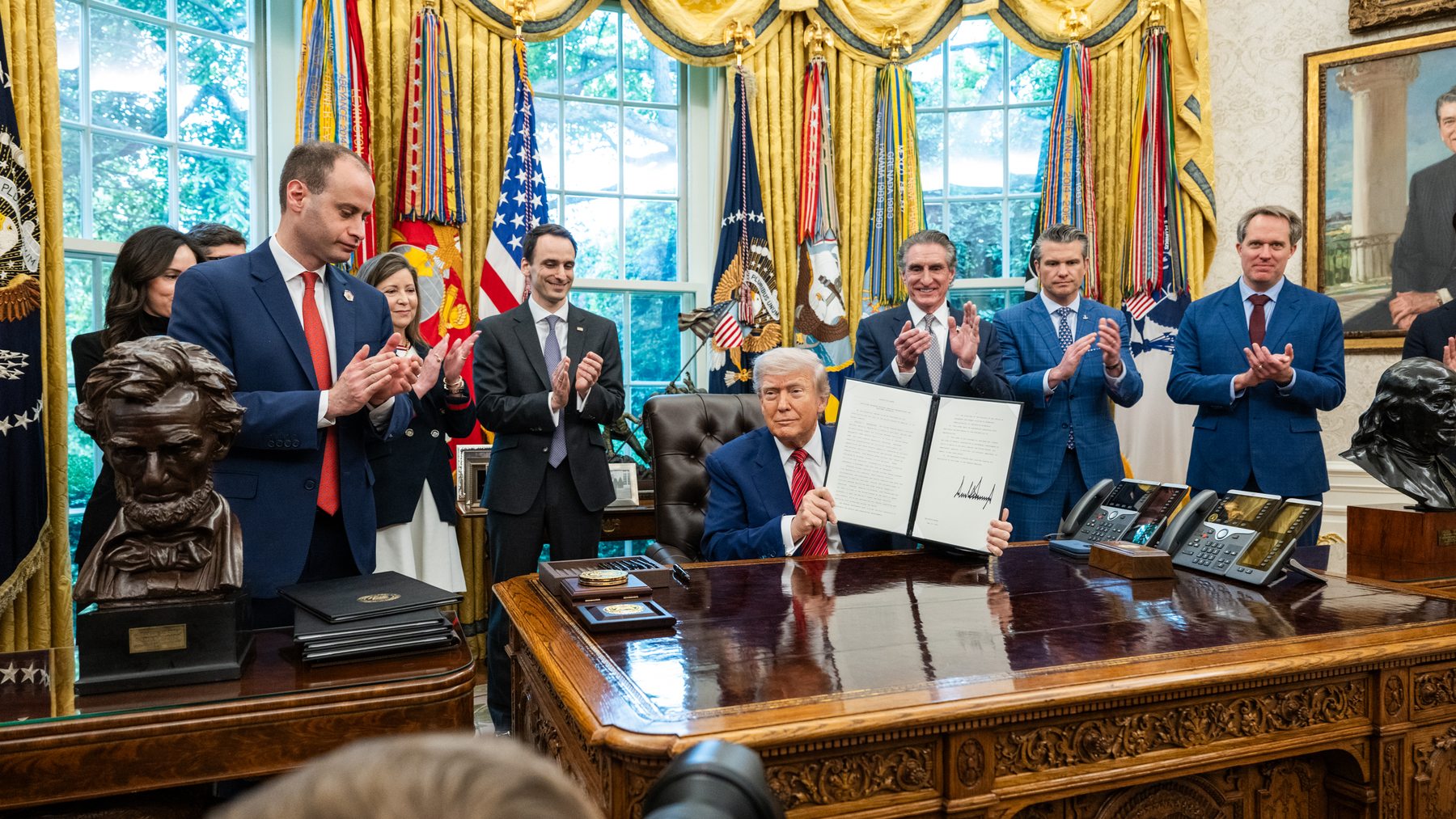
On July 23 the White House said President Trump would expand the Ratepayer Protection Pledge to governors, state legislators, developers and power providers, an effort to ensure that the companies building and powering AI data centres pay their own way rather than passing costs to households. According to the White House briefing, nearly 200 additional stakeholders, including utilities, data-centre developers, public-power authorities, co-ops and state governors, had signed on, bringing coverage to about 80% of all power delivered to American homes.
The pledge is one strand of a broader energy-abundance agenda that leans heavily on nuclear power. Reuters reported that the administration signed an agreement between the Marine Minerals unit and the Nuclear Regulatory Commission to evaluate siting nuclear projects in federal waters, part of a push to speed deployment of advanced reactors, though no commercial projects are yet planned.
The regulatory machinery is moving in the same direction. The American Nuclear Society and POWER Magazine detailed a 553-page NRC rulemaking, unveiled July 1, that the agency itself called the most significant reform of reactor licensing in decades, alongside a proposal to streamline environmental reviews and drop the requirement for draft environmental impact statements. Reuters separately reported a new framework to regulate fusion machines as particle accelerators rather than traditional reactors, a lighter-touch pathway the industry hopes to finalise by October 2026.
The results are already concrete. The Department of Energy confirmed that Deployable Energy's 'Unity' demonstration reactor achieved criticality at Idaho National Laboratory, the third DOE-authorised advanced reactor to hit the milestone under Executive Order 14301's July 4, 2026 stretch goal. The Clean Air Task Force noted a $17.5 billion DOE conditional loan commitment to support long-lead items for up to 10 new AP1000 reactors.
The deregulatory tempo is visible in the numbers. The American Action Forum's regulation tracker recorded roughly $10.8 billion in cost savings in a single July week and put 2026 final-rule cost reductions at about $1.1 trillion, with the Trump administration claiming $1.2 trillion in cumulative savings under Executive Order 14192.
For a free-market publication, the substance here is more interesting than the branding. Faster licensing, categorical exclusions, and a market-based fuel policy remove genuine barriers that have kept America's reactor fleet frozen near 100 GW for decades against a stated goal of 400 GW by 2050.
The ratepayer pledge is the sharper test. Insisting that data-centre operators internalise their own grid costs is a defensible market principle, provided it stays a voluntary, transparent compact rather than hardening into a backdoor price control on the very energy investment the country needs.
The Semaform
On July 23 the White House expanded the Ratepayer Protection Pledge to cover about 80% of US household power, as the NRC advanced a sweeping reactor-licensing overhaul and DOE reported a third advanced reactor reaching criticality.
Stripping away decades of accreted licensing friction is exactly the supply-side reform a growing, electrifying economy needs, and pairing it with a principle that data-centre developers pay their own grid costs protects ordinary consumers from cross-subsidy. Abundant, dispatchable nuclear power is the clearest path to cheap energy and industrial renewal.
Critics counter that thinning environmental reviews and dropping draft impact statements could weaken genuine safety and ecological safeguards, and that a 'voluntary' pledge policed by the White House risks becoming political pressure dressed as market discipline.
A human editor is accountable for this analysis. Read our editorial standards, how we use AI, what the content labels mean, and how to ask for a correction.