Healey's First Budget Spends the Headroom on the Oil Shock and Sends the Banks the Bill for 15 Months
The Chancellor used the fiscal buffer to pay for a £100 energy payment, extended VAT and fuel duty relief, and a temporary rise in the bank surcharge from 3 to 6 per cent. The OBR cut next year's growth forecast from 1.6 to 1 per cent and raised 2027 inflation to 3.4. Headroom is £15 billion.

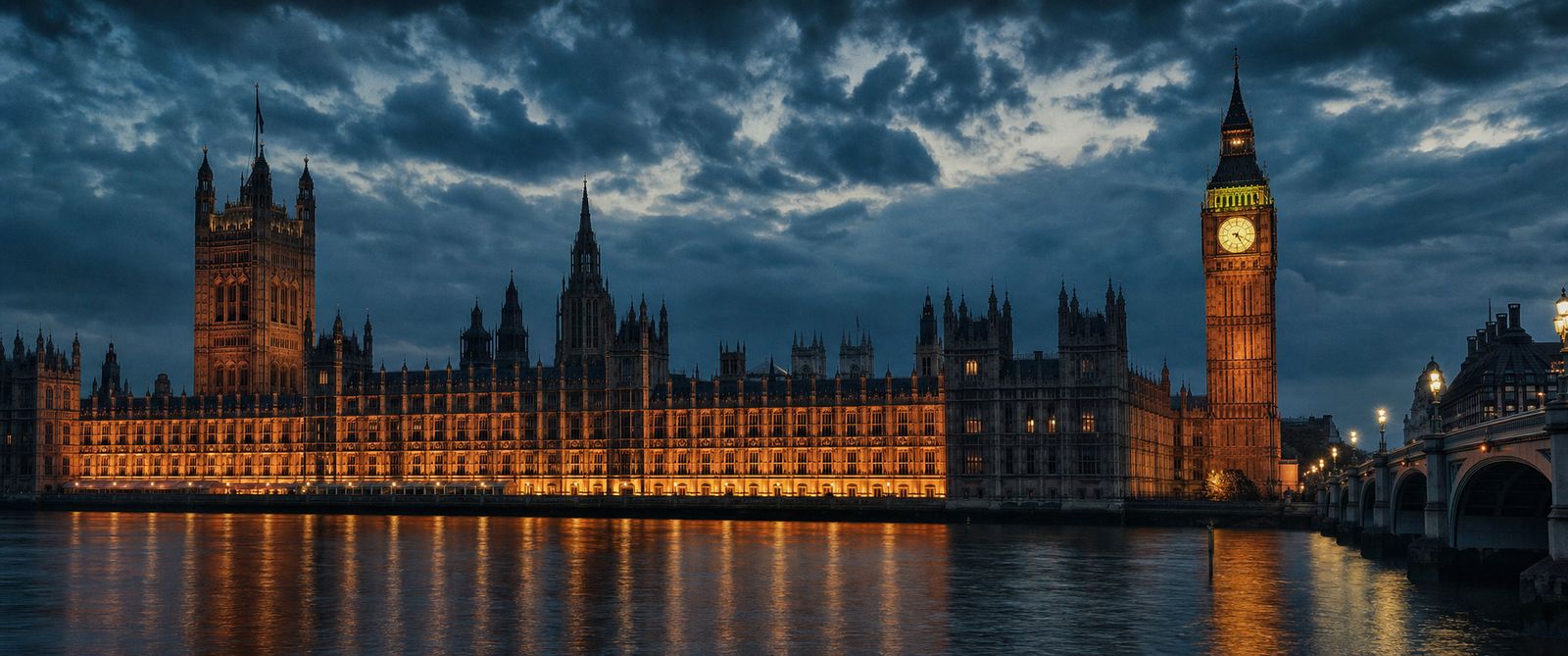
John Healey delivered his first Budget on Wednesday as a response to a war. "I have chosen to use some of the headroom established last year to absorb the impact of the Iran war, to protect the economy and to protect family budgets," he told the Commons. The Office for Budget Responsibility now puts the margin against the stability rule at £15 billion in 2029/30, rising to £22 billion the year after. Borrowing falls from 4.2 per cent of GDP this year to 3.4 next year and 1.8 per cent by 2030/31, though it is higher than the March forecast in every year. Debt peaks at 97 per cent of GDP in 2028/29. The OBR nudged growth for this year up to 1.2 per cent and cut 2027 from 1.6 to 1 per cent, with inflation averaging 3.1 per cent this year and 3.4 per cent next.
The household measures are the politics. Twenty million households in council tax bands A to D in England get a one-off £100 energy payment, with equivalent funding for the devolved nations. Standing charges come off household gas bills in Great Britain and move onto the unit rate. The VAT cut on electricity runs to July, the fuel duty freeze is extended to July, the Gas Shipper Obligation moves from bills to general taxation, and 10,000 energy-intensive firms get 25 per cent off electricity from April, backdated. Import duties go on more than 100 food products, kerosene and fertiliser. The state pension rises 3.9 per cent under the triple lock and a new allowance keeps pensioners on the full new state pension out of income tax. The threat to cut the cash ISA limit for under-65s has been dropped.
The OBR's 3.4 per cent inflation forecast for 2027 assumes the energy measures expire on schedule in July.
From the analysisThe revenue measures are the ones Sox flagged a fortnight ago. The bank surcharge rises from 3 to 6 per cent from January for 15 months, explicitly to fund the energy support. Tax on income from savings and property rises a further 2 percentage points from April 2027. The Business Asset Disposal Relief threshold is halved from £1 million to £500,000. Higher-stakes gaming machines go from 20 to 25 per cent, online marketplaces become liable for sellers' VAT, and the Defence Investment Plan is funded by a further 1 per cent cut to other departments' capital budgets. The Energy Profits Levy on the North Sea was left alone.
The surcharge is the measure that tells you how the Treasury sees the year. Fifteen months is long enough to pay for a winter and short enough to deny that it is a windfall tax, and the sunset is a concession that the case for it is political. Sox argued on 16 October that bank profits rose because Bank Rate rose, and that taxing the consequence of monetary policy to fund fiscal policy was a poor habit to start. Healey has started it, but at half the rate the City feared and with an end date, which is better than the 8 per cent reversal that was briefed. The banks will pay roughly £1 billion a year more and the Chancellor gets to say who paid for the £100.
We think this is a competent Budget for the month it was written in and a weak one for the decade it will be judged by. Every cost-of-living measure is temporary, every revenue measure is small, and the two structural choices, halving entrepreneurs' relief and raising the tax on savings and rental income, point in the wrong direction for a country the OBR expects to grow at 1 per cent next year. Capital budgets have been cut again to fund defence, so the investment that was supposed to lift the growth ceiling is paying for the frigates. The honest part is the headroom. Healey has said plainly that he spent it on the war rather than find the savings, and the IFS will say tomorrow what that costs if the war lasts.
The Bank of England meets on 5 November with inflation at 3.5 per cent and a Budget that trims measured inflation through the VAT, duty and levy decisions while adding demand through the £100 payment. The OBR's 3.4 per cent inflation forecast for 2027 assumes the energy measures expire on schedule in July. The first test of whether they do comes when the Treasury has to decide, around Easter, whether a Chancellor who has just paid for one winter is prepared to let prices rise before the next.
The Semaform
Chancellor John Healey's first Budget on 28 October used fiscal headroom to fund temporary energy bill support including a £100 household payment, raised the bank surcharge from 3 to 6 per cent for 15 months, increased taxes on savings and property income and halved the Business Asset Disposal Relief threshold, with the OBR cutting 2027 growth to 1 per cent and leaving headroom of £15 billion.
A competent response to an energy shock that leaves the structural problem untouched: temporary relief funded by a temporary bank tax, capital spending cut again, and two tax changes that penalise saving and enterprise in an economy forecast to grow 1 per cent.
The Treasury says the Budget protects family budgets through the Iran war while keeping borrowing on a falling path and the fiscal rules met; banks and business groups say the surcharge and BADR change damage investment, while Labour MPs and unions wanted more permanent support and higher taxes on wealth.
Sources
- HM Treasury, Budget 2026 (HTML), 28 October 2026
- HM Treasury, Budget 2026 speech, 28 October 2026
- Office for Budget Responsibility, Economic and fiscal outlook, October 2026
- Reuters, UK budget: Healey accepts smaller fiscal buffer after global shocks hit economy, 28 October 2026
- BBC News, Budget 2026: Key points from John Healey's speech, 28 October 2026
- Investment Week, Budget 26: Key takeaways from Healey's first Budget, 28 October 2026
- Sox News, Britain Grew When It Was Meant to Shrink. The Treasury Is Eyeing the Sectors That Did It, 16 October 2026
- Sox News, Britain's 3.5 Per Cent Is Diesel at £1.92, 21 October 2026
A human editor is accountable for this analysis. Read our editorial standards, how we use AI, what the content labels mean, and how to ask for a correction.