DOT says a lower fleetwide target will cut vehicle costs. Reuters reports the department also expects higher fuel consumption and emissions over decades, leaving households to weigh the sticker price against the cost of running a car.
Alabama's first-in-the-nation settlement requires time limits, age assurance and a non-personalised feed for teenagers. The important shift is from voluntary parental controls to rules a platform must build into the product.
Ottawa and Saab have signed a non-binding term sheet for six GlobalEye aircraft. That is a serious defence commitment, but it is not yet an order, and the distinction matters.
The First Circuit has blocked the administration's shortcut for sending migrants to countries with no connection to them. The next fight is at the Supreme Court, where due process meets executive power.
Washington and Beijing have extended their fragile trade truce to January 10. That is a negotiating window, not a settlement: the next test is whether specific commitments survive the summit spectacle.
Canada announced C$100 million in new assistance for Palestinians at the United Nations, with C$80 million for humanitarian aid and C$20 million for peace and security capacity-building.
The White House presented Donald Trump's United Nations address as proof of American strength. The more consequential question is whether the threats now have an off-ramp.
The United States, Denmark and Greenland have signed a deal that expands American military access while keeping sovereignty and self-determination explicit. The next test is whether the new power comes with rules the alliance can trust.
CNN, MS NOW and POLITICO are asking a federal judge to restore their White House access. The important question is whether press credentials are a public duty or a presidential reward for friendly coverage.
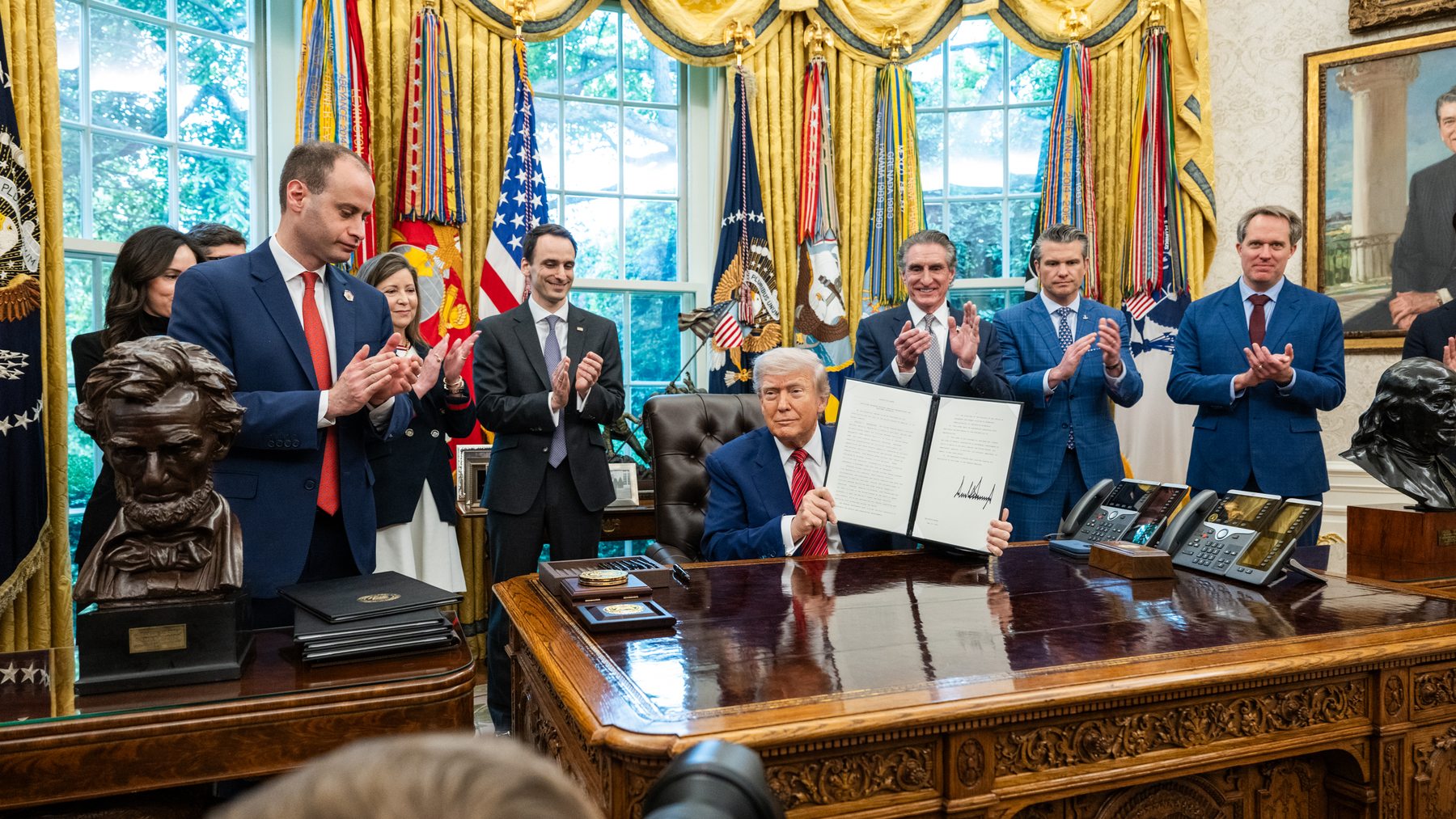
Trump has signed H.R. 5334 into law. The pressure on Moscow is now real; the test is whether its tariff powers arrive with clear triggers, price checks and an accountable way out.
August housing data offer a familiar warning: permits and total starts slipped, while completions fell 27.1 per cent from a year earlier. Affordability improves when governments let builders add supply.
The House has sent a sweeping Russia and Iran sanctions package toward the White House. Its pressure on Moscow may be justified, but tariff power needs a narrow trigger, a sunset and public accountability.
The Federal Reserve has raised its policy rate for the first time since 2023. Borrowers will feel the cost, but the larger signal is that price stability has reclaimed priority over cheap money.
The latest U.S. tariff changes on Canadian goods are narrow in volume but broad in consequence: a product-by-product regime is replacing the idea of one negotiable trade rate.
A federal judge has blocked the Postal Service from turning ballot delivery into a federal voter-enrolment test, preserving the line between moving mail and running elections.
A federal judge found that Homeland Security unlawfully took control of FEMA personnel decisions and steered the disaster agency toward a roughly 50 per cent staffing cut.
America's August inflation report put household energy back at the centre of the policy argument. Headline CPI rose 3.4 percent over the year, while fuel oil rose 52 percent and gasoline rose 27.4 percent.
U.S. regulators want comments on a principles-based framework for bank relationships with cloud, fintech and other outside providers. The answer to hidden concentration risk is clarity, not a new shadow rulebook.
The United States has used its Alien Terrorist Removal Court for the first time. That may be a legitimate national-security tool, but only if secrecy is matched by visible judicial safeguards.
California's new child-safety laws move the internet debate from warnings to product design. The durable test is whether platforms can prove that their systems protect young users without turning privacy into collateral damage.
U.S. producer prices rose 5.4 per cent over the year to August as diesel and energy surged. The policy answer is more supply and better resilience, not a cheque that hides the shock.
President Trump has promised every adult American a $5,000 dividend if Republicans hold Congress. Before calling that a dividend, Washington should show the bill, the funding and the accounting.
The United States has frozen more than $52 million tied to a Telegram marketplace for scam services. The durable answer is a transparent financial chokepoint, not a cycle of platform bans that lets the money migrate.
A social-media threat to block Canadian jets would punish American suppliers and turn market access into a political favour. The United States should compete for factories by making itself the best place to build.
American drivers are paying a record Labor Day price for gasoline and an all-time high for diesel. The answer is energy resilience, not a political promise that conflict can be made costless.
The president threatened to stop trading with countries that run goods deficits with America unless the Federal Reserve cuts rates. The threat confuses a trade account with a scoreboard and risks making households pay for the mistake.
Washington is putting a price floor and a 15 per cent tariff on imported polysilicon and related solar goods. Supply security matters. Making panels dearer is a poor substitute for building faster.
A ratepayer-protection pledge now covers roughly 80% of the power delivered to American homes, arriving alongside the most sweeping nuclear licensing overhaul in a generation.
The S&P 500 clawed back within a whisper of its June all-time high, even as a vocal minority inside the Federal Reserve floated the once-unthinkable: a rate hike, not a cut.
A decade of paperwork has cost the United States more gigawatts than any cartel ever could. Now a cross-party coalition of builders, governors and impatient voters wants the right to build back.