
GlobalNumber of the dayNews
New Zealand's OBEGALx Deficit Forecast Falls to NZ$6.8bn
Treasury sees the 2026/27 deficit shrinking from NZ$11.4bn forecast in May, with an NZ$4.0bn surplus pencilled in for 2028/29.
Rates, tax, trade and markets, explained through what they do to a household.
Treasury sees the 2026/27 deficit shrinking from NZ$11.4bn forecast in May, with an NZ$4.0bn surplus pencilled in for 2028/29.
A final investment decision for two new Kitimat processing trains raises planned annual output from 14 million to 28 million tonnes. The total cost is undisclosed, and years of construction remain before the extra exports arrive.
The 25-basis-point move is the Reserve Bank of Australia's fourth rate rise this year.
Washington and Beijing have extended their fragile trade truce to January 10. That is a negotiating window, not a settlement: the next test is whether specific commitments survive the summit spectacle.
Canada announced C$100 million in new assistance for Palestinians at the United Nations, with C$80 million for humanitarian aid and C$20 million for peace and security capacity-building.
Treasury says deaths will outnumber births in the 2060s as fertility falls and migration slows. The answer is more homes, faster productivity and a migration system that rewards the work Australia actually needs.
Michele Bullock says upside risks to inflation are materialising even as growth slows. The Reserve Bank now faces a choice between another rate rise and a longer inflation hangover.
Ottawa’s Productivity Mega Deduction would let firms expense roughly two-thirds of capital investment immediately. The growth case is strong, but the government should publish the bill, the cost and the results.
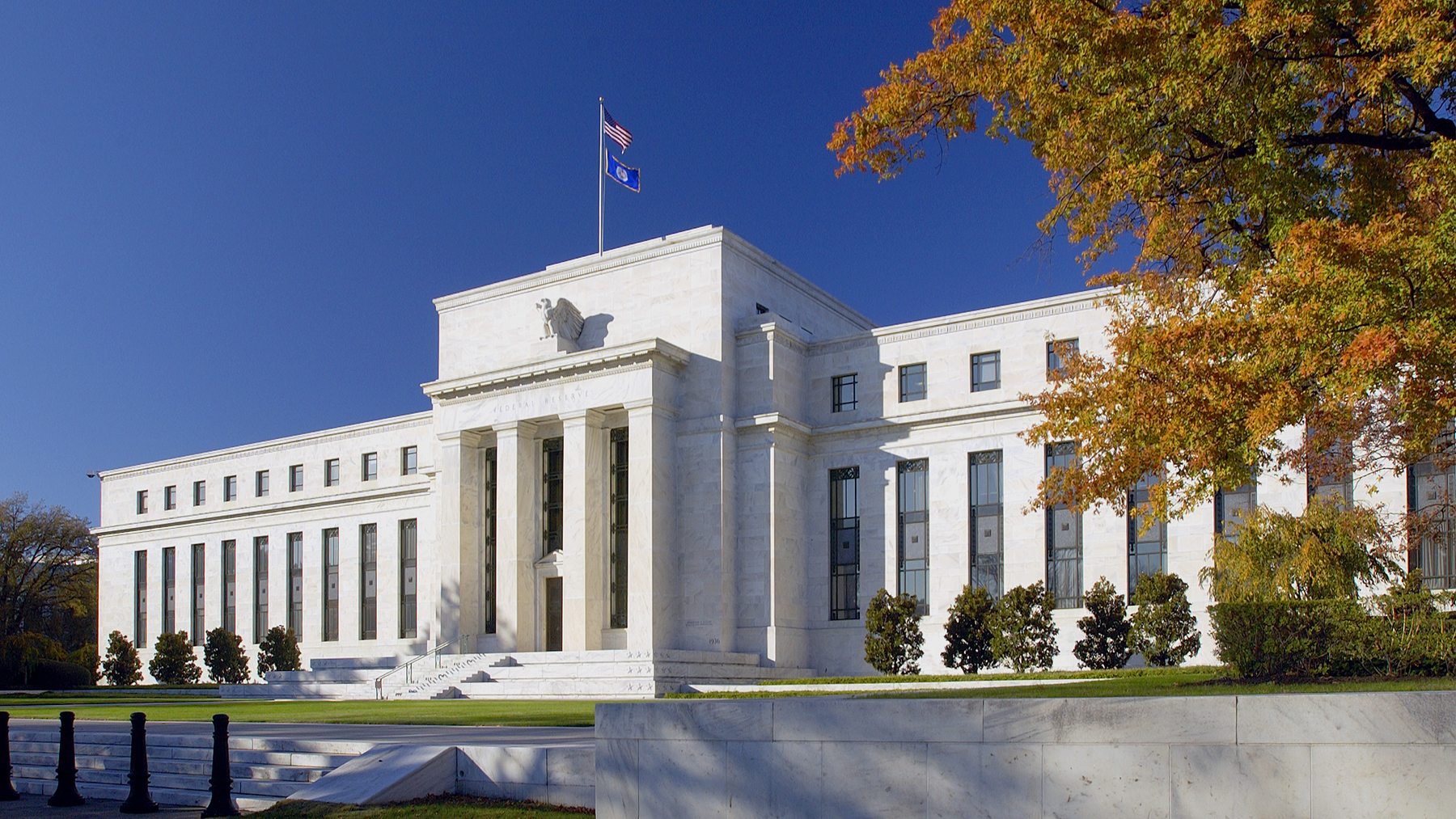
The Federal Reserve has raised its policy rate for the first time since 2023. Borrowers will feel the cost, but the larger signal is that price stability has reclaimed priority over cheap money.
The latest U.S. tariff changes on Canadian goods are narrow in volume but broad in consequence: a product-by-product regime is replacing the idea of one negotiable trade rate.
Oman postponed its Iran and Gulf meeting on the Strait of Hormuz in the name of consensus. The next step should be a verifiable shipping arrangement that protects crews, cargoes and prices.
Headline inflation held at 3% in August, but gasoline, rent and travel costs show how quickly a calm number can become a cost-of-living problem again.
America's August inflation report put household energy back at the centre of the policy argument. Headline CPI rose 3.4 percent over the year, while fuel oil rose 52 percent and gasoline rose 27.4 percent.
President Trump has promised every adult American a $5,000 dividend if Republicans hold Congress. Before calling that a dividend, Washington should show the bill, the funding and the accounting.
Britain’s promised ban on goods from illegal West Bank settlements is a consequential reset, but its credibility will depend on precise rules that punish settlement expansion without turning wider trade into collective punishment.
A social-media threat to block Canadian jets would punish American suppliers and turn market access into a political favour. The United States should compete for factories by making itself the best place to build.
The United States struck three Iranian oil tankers after Tehran fired at two American warships. Washington may claim deterrence, but turning commercial shipping into a battlefield makes energy and trade less secure for everyone.
The president threatened to stop trading with countries that run goods deficits with America unless the Federal Reserve cuts rates. The threat confuses a trade account with a scoreboard and risks making households pay for the mistake.
The United States added 162,000 jobs while Canada lost 42,000. The useful lesson sits beneath both headlines: durable prosperity depends on productive private investment, not a flattering monthly total.
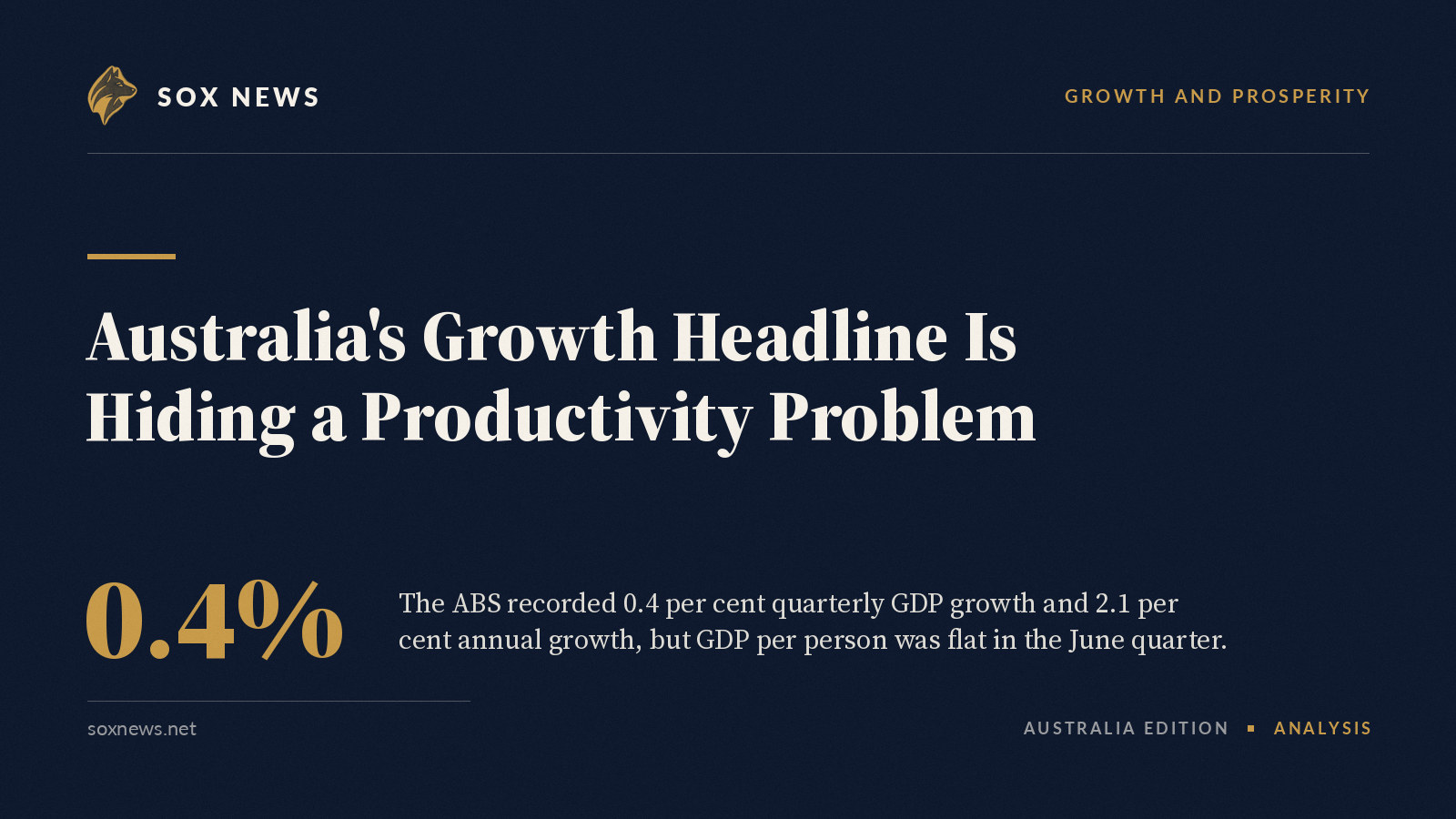
The economy grew 0.4 per cent in the June quarter, but GDP per person was flat and productivity remains weak. Australia cannot build lasting prosperity on a headline number alone.
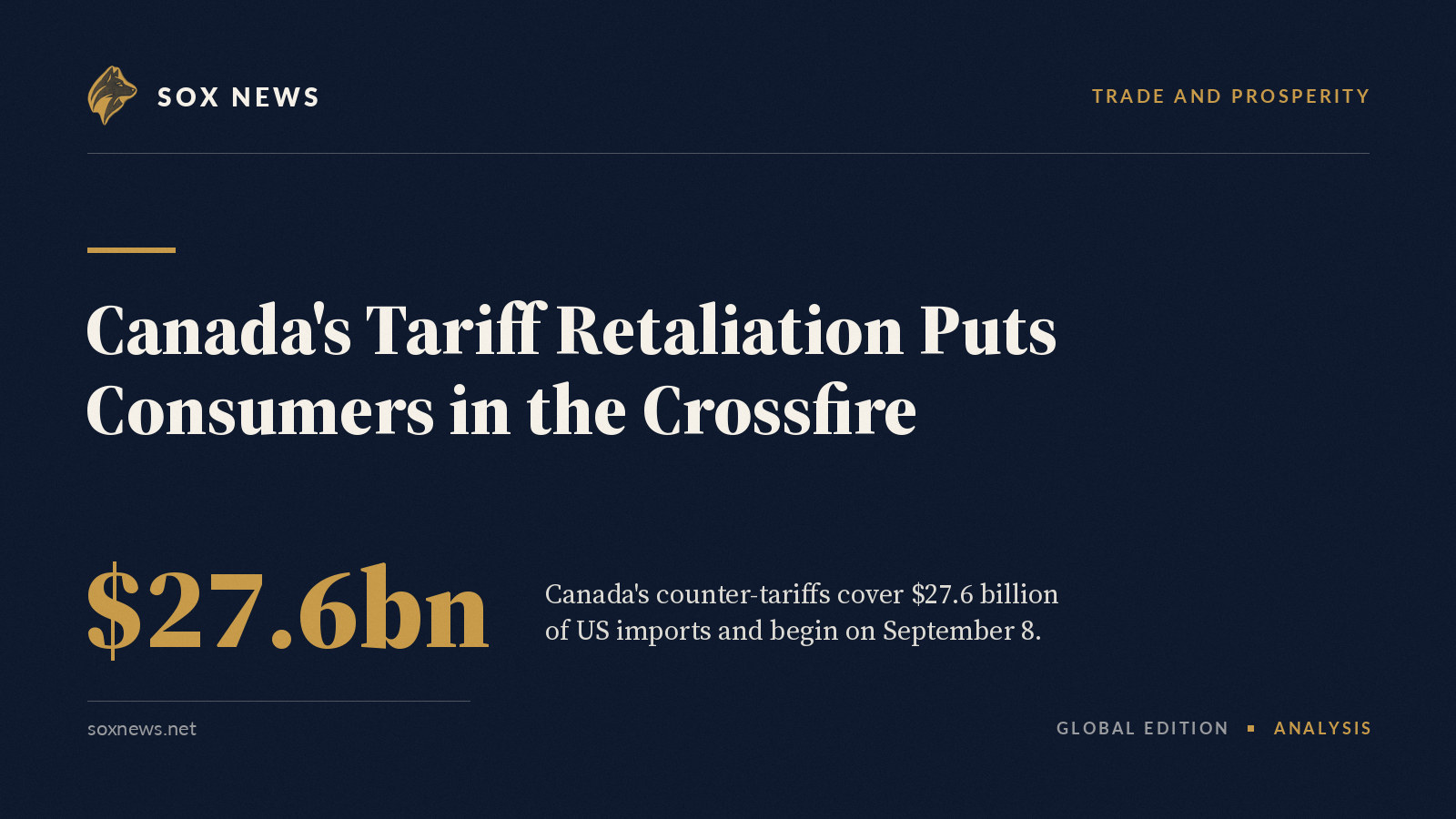
Canada will match new US tariffs on $27.6 billion of goods while spending $7.5 billion to cushion the shock. The bill will still reach Canadian buyers.
Minutes from the Reserve Bank's August meeting show a serious debate over another increase. The unanimous hold buys households time, while inflation, energy and data centre investment keep the next decision open.
Washington is doubling the size of its long bond buybacks to support liquidity. The move can steady trading, while durable borrowing costs will depend on debt, inflation and credible fiscal restraint.
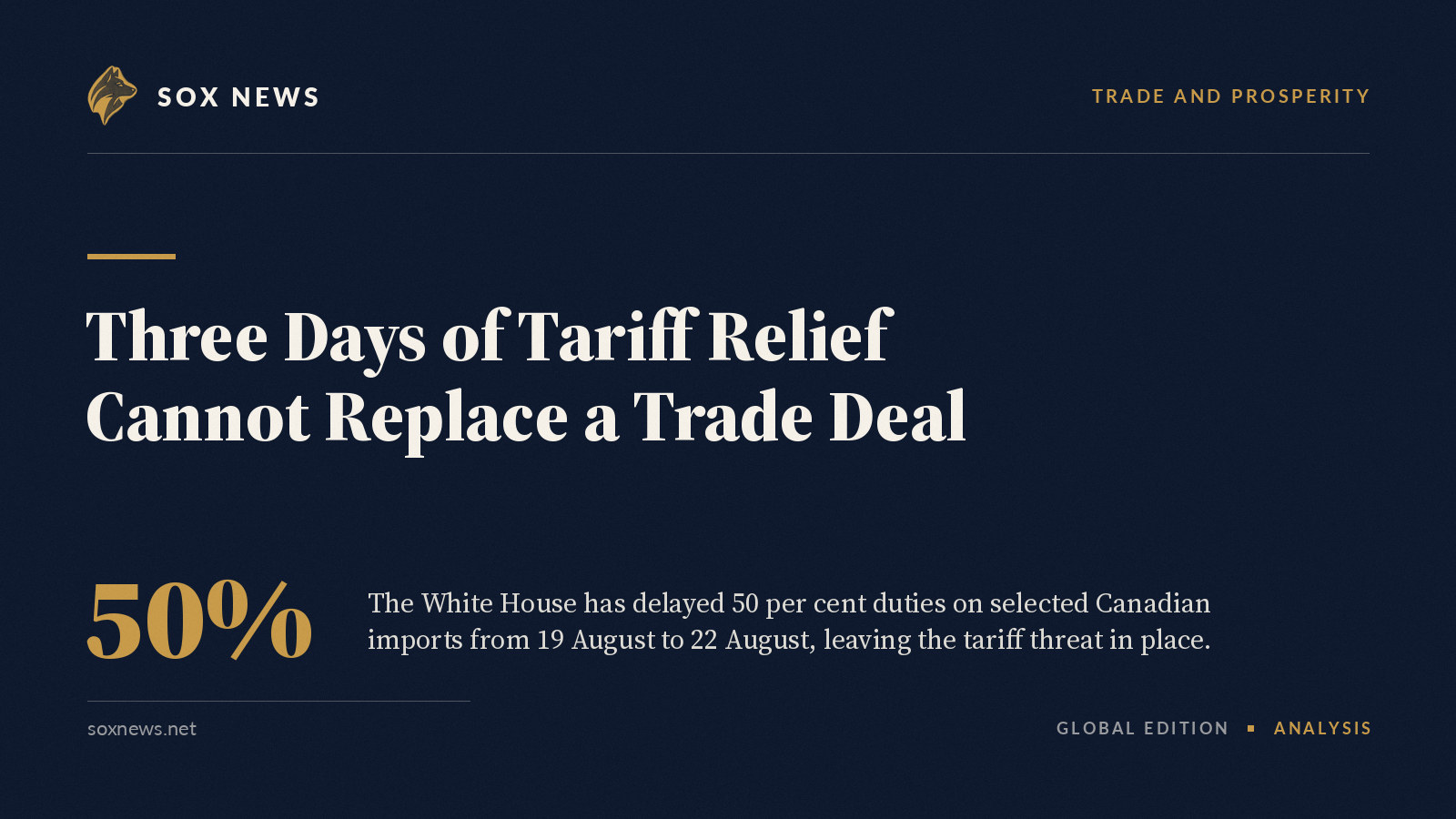
Washington has delayed 50 per cent duties on selected Canadian goods until 22 August. The pause gives consumers and firms breathing room, but the durable answer is rules that survive presidential improvisation.
Anthony Albanese has asked Donald Trump to remove a 12.5 per cent tariff. The request is sensible diplomacy, yet the durable answer is a more competitive Australia that can choose its markets rather than plead for favours.
The RBA has held the cash rate at 4.35 per cent, but households are still carrying a debt burden near its pre-crisis peak. The way out is not to wait for cheaper money. It is to let Australia build and compete.
Canberra's temporary fuel relief has ended as Middle East risk keeps energy prices elevated. The bill now returns to drivers, businesses and every household that depends on transport.
Downing Street says VAT on domestic electricity will drop from 5% to 0% from 1 October, taking about £45 a year off the next Ofgem price cap. The politics are easy. The economics are not.
A surprise June employment surge has revived bets on a fourth rate rise, leaving the Reserve Bank pinned between 4% inflation and a labour market that refuses to cool.
The new prime minister zeroed VAT on electricity and revived the £2 bus fare cap, but with the tax take heading to its highest share of the economy since 1948, the arithmetic is unforgiving.
The S&P 500 clawed back within a whisper of its June all-time high, even as a vocal minority inside the Federal Reserve floated the once-unthinkable: a rate hike, not a cut.