Snowy 2.0 Will Cost $25 Billion to Save $7 Billion. Canberra Says Stopping Would Cost More
The government-owned Snowy Hydro now puts the cost of its pumped hydro expansion at $22.2 billion with a $25 billion scenario, twelve times the 2017 price and double the 2023 reset, with full commissioning pushed to late 2029. Its own case for the project is a $7 billion reduction in wholesale prices over the next 50 years.

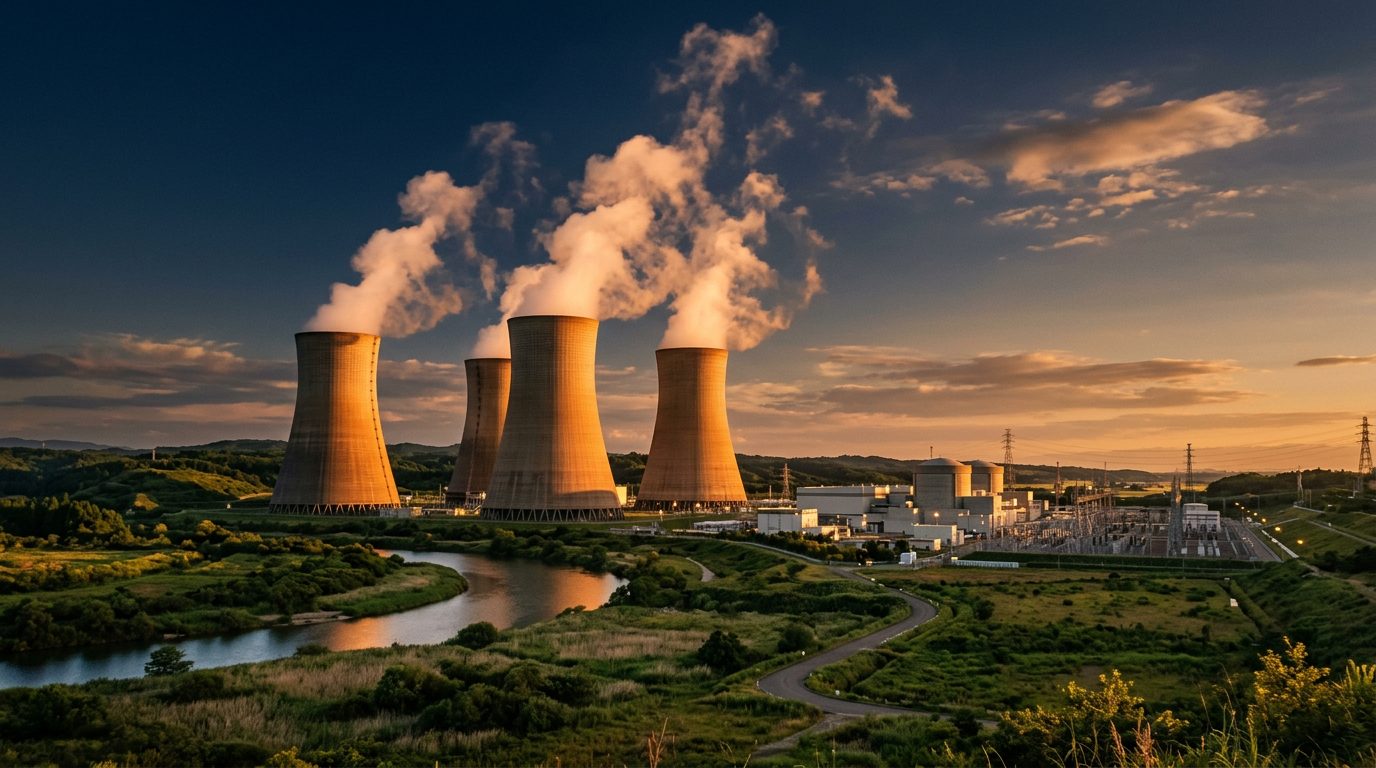
Snowy Hydro announced late on Thursday that the target cost to complete Snowy 2.0 is now $22.2 billion, with an allowance for a cost scenario of $25 billion, following a reassessment by principal contractor Future Generation Joint Venture. Full commissioning is now targeted for late 2029. The project was announced by Malcolm Turnbull in 2017 at $2 billion with completion in 2021, had reached $6.1 billion by the final investment decision in December 2018, and was reset in 2023 at $12 billion with a 2028 date. Machine tunnelling is 65 per cent complete and drill and blast tunnelling 95 per cent. Energy Minister Chris Bowen and Finance Minister Katy Gallagher said in a joint statement that the costs were "very disappointing" but that abandoning the project would jeopardise grid reliability, eliminate 5,000 jobs and raise electricity prices.
The company's explanation is unusually direct about whose fault it is. The primary reasons listed are "design immaturity of the project when the final investment decision was made", the contractor's failure to meet productivity targets, "cost and planning underperformance by FGJV leading to previous underestimating of the delivery scope", and global cost escalation beyond the allowances made in 2023. Chief executive Dennis Barnes said that at the 2023 reset only 44 per cent of the construction design had been completed and that it is now 96 per cent, which is another way of saying the $12 billion figure the government approved three years ago was set before anyone knew what was being built. He added that abandoning the fixed-price contract had protected the project from "an even greater cost increase" and that under the old terms it would again have stopped "under the weight of billions of dollars of claims".
The practical questions are now about the capital strategy and the contingency.
From the analysisSnowy Hydro is careful to say that $22.2 billion is "not the amount that will have to be funded by taxpayers". At the $12 billion estimate about a third, $4 billion, was Commonwealth equity the company did not have to repay and the rest was government and bank loans plus Snowy's own cash flow. Work is "underway on the Commonwealth's preferred capital strategy at the new cost", which means the equity question is open. Snowy Hydro is wholly owned by the Commonwealth, so the distinction between taxpayer money and a loan the taxpayer's company must repay with interest is one of accounting, and the Australian reported on Thursday that the company's own modelling puts the wholesale price benefit at just over $7 billion to 2075.
That is the figure that should frame the argument, because Snowy Hydro itself put it in the release: the project will "reduce wholesale electricity costs by more than $7 billion to 2075". A $22 billion to $25 billion asset whose stated consumer benefit is $7 billion over 49 years is being justified on other grounds, and the company names them: 2,200 megawatts of long-duration storage described as the grid's "insurance policy against multi-day wind and solar droughts", more than half the storage the grid needs by 2050, and $18.3 billion of economic activity during construction. The first of those is a real argument. The last is the cost restated as a benefit.
We think the government is probably right that finishing is now cheaper than stopping, and that this is exactly the position a sunk-cost project is designed to put a minister in. With 65 per cent of the machine tunnelling done and the design 96 per cent complete, the remaining spend buys an asset; walking away buys 27 kilometres of hole. The policy failure is upstream, in a final investment decision taken on 44 per cent design, a fixed-price contract the company now says was "never suitable", and a $12 billion reset that the government accepted while the line-by-line review that would have tested it was still unwritten. Every one of those decisions was taken by a Commonwealth-owned company reporting to Commonwealth ministers, which is the case against governments owning megaprojects rather than contracting for the service they provide. The grid needs storage. There were cheaper ways to buy it.
The practical questions are now about the capital strategy and the contingency. Barnes defended the $2.8 billion buffer as the product of estimation difficulty; Bowen called the estimate "the best estimate at this point" and did not rule out further increases. Opposition Leader Angus Taylor, who approved the 2019 cost as energy minister, has called for Bowen to resign, which tells you how far the blame extends in both directions. The Commonwealth has yet to say how it will fund the new cost. The project's first units are still years away, and the next cost reassessment is a question of when rather than whether.
The Semaform
Government-owned Snowy Hydro said on 22 October that the Snowy 2.0 pumped hydro project will cost $22.2 billion with a $25 billion scenario and be fully commissioned in late 2029, twelve times the 2017 estimate, and ministers Bowen and Gallagher said the government remains committed to completing it.
Finishing is probably cheaper than stopping, which is the trap sunk-cost megaprojects set. The failure lies in a 2018 investment decision on 44 per cent design and a 2023 reset accepted without a line-by-line review, and it argues against governments owning megaprojects rather than contracting for the storage they need.
Snowy Hydro and the government say the project is a generational asset providing more than half the grid's 2050 storage needs and that abandoning it would cost 5,000 jobs and raise prices; critics, including some energy analysts, say the storage could be bought in smaller projects at lower cost and that the $7 billion consumer benefit does not justify a $25 billion outlay.
Sources
- Snowy Hydro Limited, Snowy 2.0 Cost Reassessment Complete, 22 October 2026
- Minister for Climate Change and Energy and Minister for Finance, Joint media release: Update on Snowy 2.0, 23 October 2026
- Reuters, Australia's Snowy Hydro project cost blows out to estimated $18 billion, 23 October 2026
- ABC News, Review finds delayed Snowy 2.0 hydropower project could cost up to $25 billion, 23 October 2026
- The Australian, Snowy Hydro 2.0 cost hits $25bn but will only deliver $7bn in savings, 22 October 2026
- Sydney Morning Herald, 'Incredibly disappointing': Snowy 2.0 cost blows out to $25b in biggest setback yet, 23 October 2026
- RenewEconomy, 'Very disappointing': Snowy confirms pumped hydro costs double again to a possible $25bn, 23 October 2026
- The West Australian, Snowy 2.0 blowouts 'alarming' as costs grow twelve-fold, 23 October 2026
A human editor is accountable for this analysis. Read our editorial standards, how we use AI, what the content labels mean, and how to ask for a correction.