South Korea’s U.S. Energy Plans Start With a Texas Power Plant
The first selected project is a 6,472 megawatt gas plant for data centers. A framework for eight nuclear reactors and an Alaska LNG review are at earlier stages.

The United States and South Korea have set out three energy projects under their strategic investment agreement. The furthest along is a proposed $22.3 billion natural gas power plant in Encinal, Texas, designed to supply electricity directly to data centers at the site. The joint Commerce Department fact sheet says Phase 1 is due to begin operating in 2029, with the full facility coming online in stages by 2032.
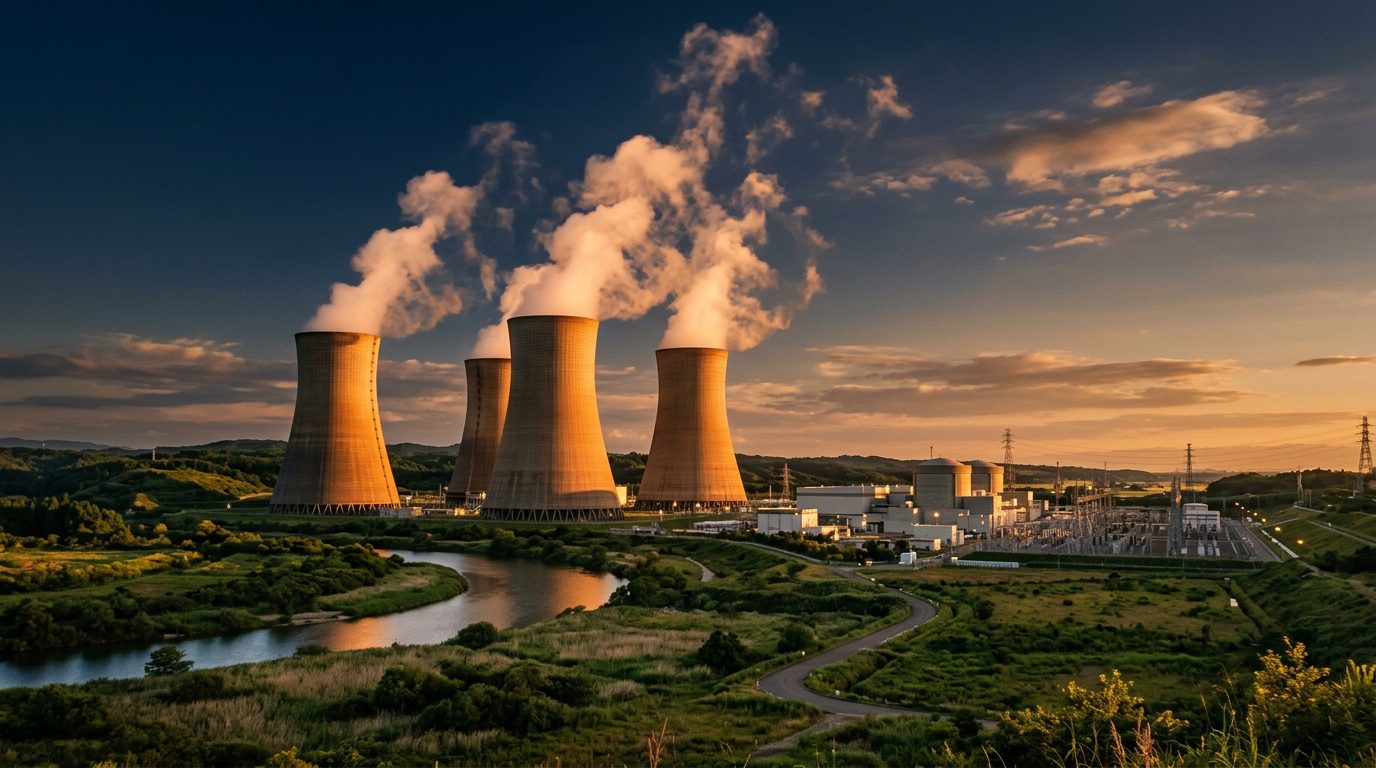
The two governments also agreed on a cooperation framework for eight large nuclear reactors, six Westinghouse AP1000 units and two South Korean APR1400s. The framework allocates $120 billion from the broader $200 billion investment commitment, including $100 billion for construction and $20 billion in contingency reserves. The countries will work toward a $10 billion advance payment by year end, subject to domestic legal requirements. Specific construction sites and schedules were not provided.
The announced dollar figure includes projects that still need sites, agreements and construction.
From the analysisAlaska LNG is at an earlier stage. Washington and Seoul agreed to begin work on the project, subject to commercial reasonableness and domestic legal requirements. The joint fact sheet gives no investment amount or schedule. Reuters reports the Korean government will review the project before deciding whether to proceed.
The projects answer a real constraint on American technology investment: data centres need large, dependable power supplies. The Texas plant is the first selected project and has a timetable. The nuclear plan could add firm generation, but it remains a framework whose capital, sites and contracts have to turn into construction. Alaska LNG is conditional.
Measure the package by electricity delivered. The announced dollar figure includes projects that still need sites, agreements and construction. The United States should make it possible to finance and build reliable generation, while keeping project terms and legal conditions clear. Track each plant by site, financing, construction milestones and operating date. That is how a promise becomes capacity.
The Semaform
The United States and South Korea announced a $22.3 billion Texas gas power project, a framework for eight U.S. reactors and a conditional review of Alaska LNG under their strategic investment agreement.
Reliable electricity is a prerequisite for data centre growth and industrial investment. Publish clear financing and construction milestones, then judge the package by power actually delivered.
The governments describe a major energy buildout. Its projects are at different stages: Texas is selected, nuclear investment remains under a framework and Alaska LNG requires further commercial and legal review.
Sources
A human editor is accountable for this analysis. Read our editorial standards, how we use AI, what the content labels mean, and how to ask for a correction.