Australia's 4% Inflation Print Puts Supply Policy in Focus
Annual CPI reached 4.0% in August, while the trimmed mean stayed at 3.6% for a third month. Fuel, electricity and building costs explain why the headline alone cannot set Australia's next policy move.

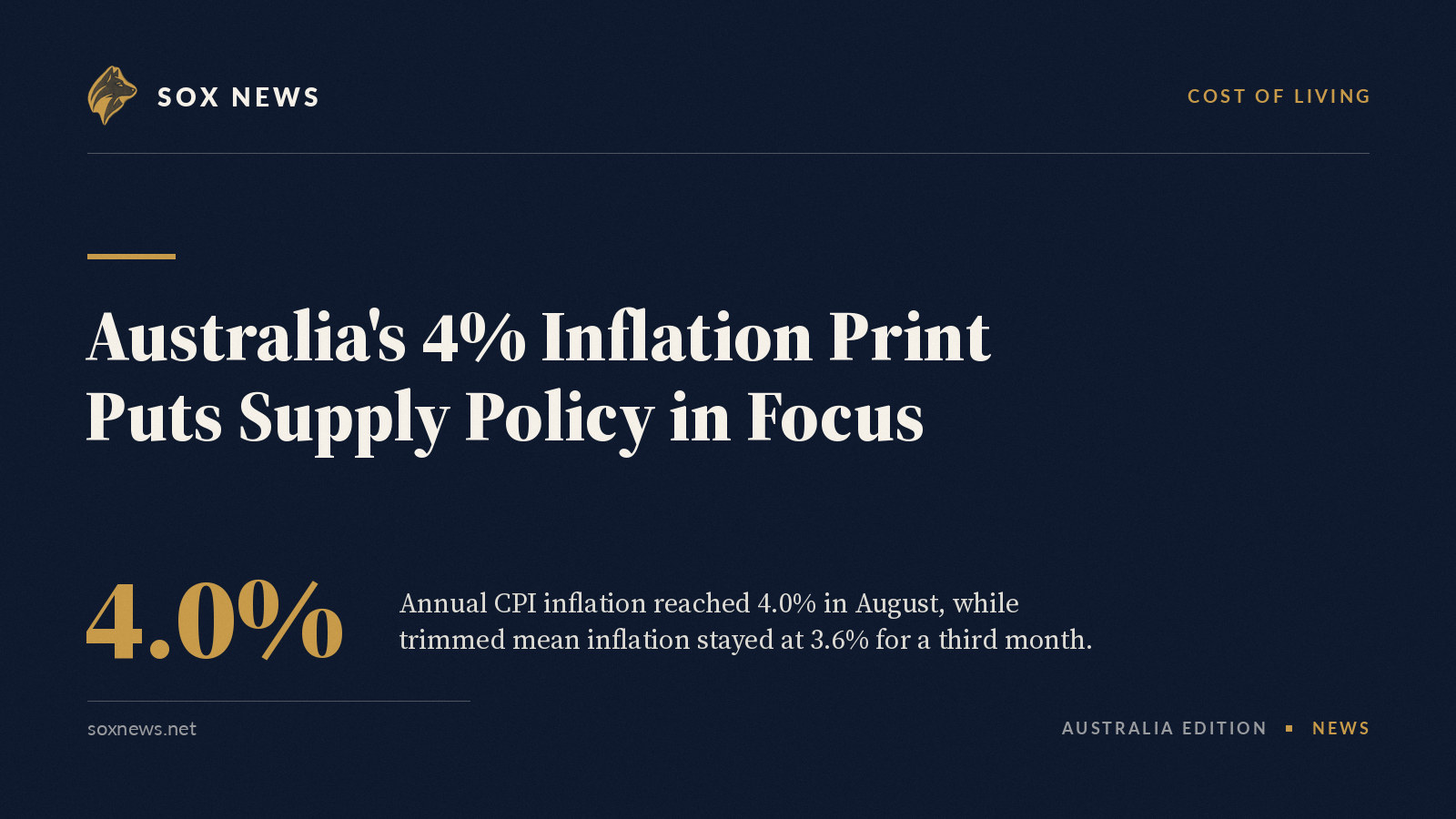
The Australian Bureau of Statistics reported that consumer prices rose 4.0 per cent in the 12 months to August, up from 3.5 per cent in July. The monthly CPI rose 0.4 per cent in original terms. Trimmed mean inflation, which dampens the largest price movements, rose 0.2 per cent in the month and held at 3.6 per cent annually for a third month. The headline accelerated; the underlying measure did not.
The household mix matters. Automotive fuel rose 14.8 per cent in August as world oil prices climbed and the remainder of federal fuel excise relief unwound, the ABS said. Electricity prices were 13.2 per cent higher over the year, largely because Commonwealth rebates ended and payment timing shifted. New dwelling prices rose 5.4 per cent as builders passed on higher labour and materials costs.
Higher rates can restrain demand, but they cannot add electricity supply or speed homebuilding by themselves.
From the newsThe Reserve Bank raised its cash rate target by 25 basis points to 4.60 per cent on 29 September. Its board cited elevated inflation, higher global energy prices and pressure on domestic capacity. The ABS figures arrived the next day, so they were not part of that decision. Reuters reported that the annual headline rate remains above the RBA's 2 to 3 per cent target band. The ABS measured a 0.4 per cent monthly rise in original terms and 0.7 per cent after seasonal adjustment.
Higher rates can restrain demand, but they cannot add electricity supply or speed homebuilding by themselves. Canberra should make reliable energy investment and housing construction easier, while being candid about the cost and timing of rebates. Monetary discipline still matters while broad price pressure sits above target. Lasting cost relief also needs more of the things households buy.
Sources
- Australian Bureau of Statistics, Consumer Price Index, Australia, August 2026, 30 September 2026
- Reuters, Australia inflation stubbornly high in August, defying run of rate hikes, 30 September 2026
- Reserve Bank of Australia, Statement by the Monetary Policy Board: Monetary Policy Decision, 29 September 2026
A human editor is accountable for this news. Read our editorial standards, how we use AI, what the content labels mean, and how to ask for a correction.